——— For Construction & Capital Project Organizations

Your PM workforce is built for a world that is leaving.

AI is absorbing the execution layer of project management — scheduling, tracking, reporting, coordination — faster than most organizations are modeling. The human value in project delivery is shifting toward judgment, influence, and strategic leadership. Most PM workforces are not being developed toward those capabilities deliberately.
The organizations that close this gap now will have a structural advantage that compounds. The ones that don't will feel it in margin erosion, succession gaps, and programs that underdeliver — not because the scheduling was wrong, but because nobody in the room was operating at the right layer.
——— Sound Familiar?
— You're running $15M–$100M in annual work and your best project managers came up through the field. They can build anything. Nobody ever taught them how to lead a project organization.
— Your project management process exists because one person does it consistently — not because it's documented, trained, or designed to survive their departure.
— You've grown significantly in the last four years. Your org chart hasn't. Every major decision still routes through you, and you're not confident the next layer is ready.
— You've thought about a project director or operations role. You can't justify it full-time — but the gap is already costing more than that salary in margin, rework, and your own bandwidth.
If at least two of those are true, you're in the right place.
The quiet cost — happening now
They stay and plateau.
— Your best PM is running jobs the same way they did four years ago. Reliable. Competent. Not growing.

— Scope gaps at bid that compress the job before a shovel moves. Change orders managed reactively instead of avoided.

— Subcontractor relationships held together by pressure rather than trust. Rework routed around rather than solved.

— None of it appears on a report. All of it appears in margin.
Understand Why
The compounding cost — your next decision
They get promoted anyway.
— You need a second layer of leadership. You promote your best operator into the role — because there's no one else.

— Now you've lost your best PM and gained a mediocre leader. The jobs feel it. So does everyone beneath her.

— The people who were ready to step up into her old role aren't — because no one ever developed them either.

— You've moved the problem up one level and made it harder to see.
Assess Your Organization
The visible cost — the one that gets noticed
They leave.
— Recruiter fees: 20–25% of first-year compensation. Relocation: $15,000–$50,000.

— 90–120 day vacancy. 18–24 months before a replacement reaches full effectiveness.

— Stakeholder relationships, institutional knowledge, and program history that don't transfer. The organization starts from zero.

— This is the most recoverable version of the problem — and the most preventable, if the first two had been addressed.
Assess Your Organization
Conservative fully-loaded replacement cost · Senior PM · Construction and capital-intensive sectors

$150K–$250K

Per departure. That's the number everyone calculates. It ignores the margin erosion from the PM who stayed and plateaued, and the organizational damage from the one who got promoted before they were ready. This engagement addresses all three — and costs less than replacing one of them.
——— The Landscape

The profession is shifting. Most PM workforces aren't.

The organizations building toward durable human capabilities now will have a structural advantage that compounds. The ones still developing for execution will discover the gap when it's expensive to reverse.
What most PM workforces are optimized for
Schedule management
Building, maintaining, and optimizing project schedules. AI handles this faster and more accurately than humans.
Status tracking and reporting
Monitoring progress, generating reports, escalating variances. Being automated at scale across the industry.
Risk register maintenance
Documenting and tracking identified risks. AI identifies patterns humans miss. The maintenance layer is commoditizing.
Coordination and alignment
Keeping teams aligned, managing dependencies, resolving routine conflicts. Increasingly handled by intelligent workflow tools.
What determines program success as AI absorbs the above
Judgment under uncertainty
Making consequential decisions with incomplete information in complex organizational environments. Cannot be automated.
Organizational influence
Shaping decisions before they are made, building coalitions, moving organizations without positional authority.
Strategic positioning
Operating at the intersection of program delivery and organizational strategy. Reading what's not being said and acting on it.
Leadership presence
The trust, credibility, and relational capability that determines whether a room follows someone when the data is ambiguous.
——— The PROGRAM

A 90-day intervention that changes how your PM workforce operates.

This is not a training event. It is a structured behavioral development program that moves a cohort of your high-potential PMs from execution-layer positioning toward leadership-layer contribution — and produces visible, measurable evidence of that shift within 90 days. The program is designed for organizations, not individuals. You identify the cohort. You sponsor the engagement. The development happens inside your organization, on real work, with real stakes. The outcomes belong to you.

01

PHASE ONE

Organizational diagnostic

A structured assessment that surfaces the specific patterns driving the development gap in your environment and quantifies what they're costing you — in your own terms, using your own data. Results are reviewed in a personal 45-minute consultation before the program is scoped.

02

PHASE TWO

The half-day workshop

A facilitated session that creates the recognition and the commitment necessary for the development work that follows. Participants leave with a clear understanding of where they are currently positioned, what operating at the leadership layer requires, and a specific organizational problem they have chosen to own.

03

PHASE THREE

90-day Magnum Opus sprint

Each participant identifies and launches a self-initiated organizational improvement initiative — chosen by them, not assigned. Six biweekly group coaching sessions support the development. The program closes with a cohort showcase in which participants present their initiatives and outcomes directly to organizational leadership.

——— The MAGNUM OPUS

Real leadership development on real work.

The Magnum Opus is the mechanism that separates this program from every other leadership development offering your organization has considered.

Each participant chooses — not is assigned — a real organizational problem they are positioned to solve. They develop and launch a solution over 90 days, building the stakeholder coalition, making the case to leadership, and driving an outcome that the organization values independently of any development metric.

This is not a simulation. It is not a case study. It is a live leadership experience inside your organization, with real stakes, producing real outcomes — and generating visible evidence of behavioral change that your leadership team can observe directly.
What your organization has at the showcase
Visible behavioral change
Participants operating differently in strategic conversations — observable by the leadership team that sponsored the program
Real organizational outcomes
Each Magnum Opus delivers an improvement initiative that has organizational value independent of its development purpose
A developing leadership pipeline
Participants who have directly experienced what leadership-layer work requires and have proven they can do it
Measurable before-and-after data
Baseline and completion assessments that document the shift in positioning, confidence, and organizational contribution
——— The RETURN

The investment in context.

This program is priced at $25,000–$40,000 per organizational engagement depending on cohort size and scope. Here is that number in context.

1x

Less than replacing one senior PM
At $150,000–$250,000 per departure, this engagement costs less than a single voluntary exit from a high-performer who couldn't see a leadership path. The program addresses the reason they leave.

4–8

Leaders developed simultaneously
A cohort of 4–8 participants means your cost per developed leader is $3,000–$10,000 — a fraction of individual executive coaching or external leadership programs that lack your organizational context.

90

Days to observable outcomes
The Magnum Opus showcase gives your leadership team visible, specific evidence of behavioral change and organizational contribution within 90 days of the workshop — not at an annual review.
Free · No automated results

Find out where your
organization actually stands.

A short assessment designed for leaders of project-intensive organizations who want an honest read on their PM workforce — not against a generic benchmark, but against the specific demands of their work, their market, and where the industry is going.
10 minutes · Results presented personally · 45-minute consultation included

Who this program is designed for

— Regional construction firms — general contractors, specialty contractors, design-build, civil and infrastructure — running $10M–$150M in annual work without a formal PM development program.
— Capital-intensive organizations in nuclear, defense, energy, utilities, and infrastructure where the human judgment layer determines whether delivery succeeds.
— Owner-operators and principals who have identified high-potential PMs and want a deliberate development pathway — without a university program, a national training network, or an internal L&D function to draw from.
— Organizations where the cost of staying underdeveloped is showing up in margin, in succession gaps, or in the quiet disengagement of people who can't see where they're going.

What this program is not

— A promotion program. Promotion decisions belong to your organization. This develops the capability and visibility that makes those decisions possible.
— A generic leadership training event. This is designed specifically for project professionals in capital-intensive environments — not adapted from a general management curriculum and applied to people who build things for a living.
— A substitute for organizational change. If your culture actively suppresses leadership emergence, no development program will overcome it. The assessment will surface this clearly.

About

A practitioner, not a theorist.

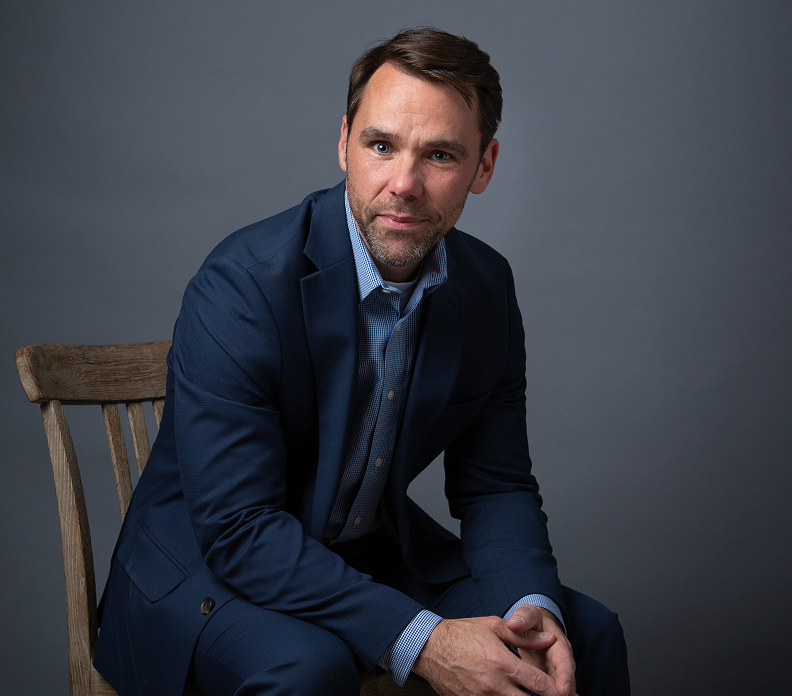
    I have spent more than 25 years inside high-consequence project and operational environments spanning nuclear energy, national security, defense, and large-scale capital infrastructure. My experience includes leadership and governance responsibilities within complex federally regulated programs where execution failure carries significant operational, financial, and organizational consequences.

    Throughout that time, I observed a recurring pattern: organizations consistently reward reliability, technical competence, and execution discipline, yet often fail to develop those same individuals into strategic leaders capable of shaping direction, influencing decisions, and building resilient systems.

    The methodology I teach was not assembled from motivational theory or borrowed management trends. It was developed through direct observation of the organizational behaviors, leadership dynamics, and human performance patterns that separate trusted executors from influential leaders.

    My work integrates principles from nuclear human performance, Lean Six Sigma, behavioral science, and evidence-based leadership development to help individuals and organizations identify hidden constraints, improve decision quality, and develop leadership capacity that scales under pressure.

    — Project-Program Director · Los Alamos National Laboratory
    — MBA · MS · PMP
    — Lean Six Sigma Black Belt
    — FLOW Peak Performance · Aubrey Daniels Performance Managemen