Why You Should Care About Motivation (Spoiler: It’s Not What You Think)
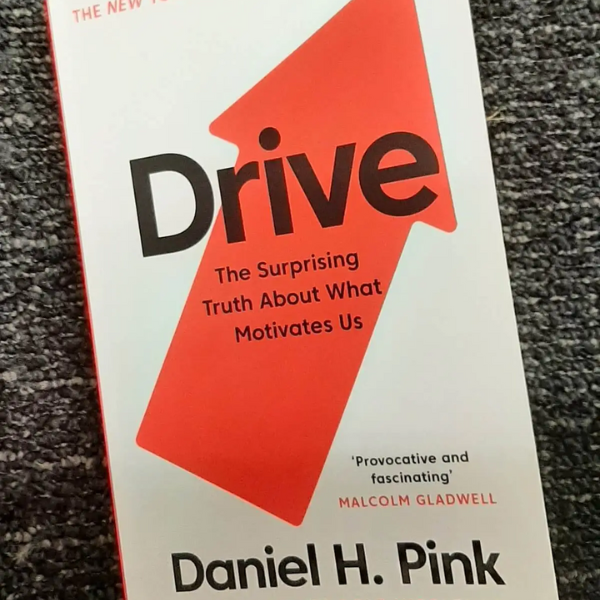
Let’s face it: motivation is the elusive unicorn of personal and professional life. We all want it and chase it, but it often feels like it’s just out of reach. Enter Daniel H. Pink with his groundbreaking book, “Drive: The Surprising Truth About What Motivates Us.” If you’ve ever wondered why traditional rewards don’t seem to work as well as you’d hope, this book is about to blow your mind. So, buckle up and get ready to dive into the world of motivation, where carrots and sticks are out, and autonomy, mastery, and purpose are in.
The Myth of the Carrot and the Stick
We’ve all heard the old adage: “The carrot and the stick.” It’s a classic metaphor for motivation, where the carrot represents rewards and the stick represents punishment. But here’s the kicker – Pink believes this approach is outdated. In fact, it can be downright counterproductive. So, what’s the deal? Why don’t these traditional motivators work as well as we think?
The answer lies in what Pink calls Motivation 2.0, a system that’s based on external rewards and punishments. While it might work for simple, straightforward tasks, it’s a different story regarding complex, creative endeavors. Think about it: would you feel more motivated to solve a challenging problem if someone dangled a carrot in front of you, or were you genuinely interested in the task?
Autonomy: The Freedom to Drive
Imagine being told exactly what to do, how, and when to do it. Sounds stifling, right? Imagine having the freedom to choose your path, make your own decisions, and work on what truly interests you. That’s the essence of autonomy, one of the three key elements of intrinsic motivation that Pink highlights.
Autonomy isn’t just about working independently; it’s about having control over four main aspects: task, time, technique, and team. Let’s break it down:
- Task: Do you have the freedom to choose what you work on?
- Time: Can you decide when you work on it?
- Technique: Are you able to choose how you approach the task?
- Team: Do you have a say in who you work with?
When you control these elements, you’re not just a cog in the machine; you’re driving your own success. And the best part? This sense of autonomy leads to higher engagement, satisfaction, and productivity. Who wouldn’t want that?
Mastery: The Pursuit of Excellence
Let’s talk about mastery. It’s that feeling you get when you’re absorbed in a task that you lose track of time. You’re in the zone, and everything just clicks. As psychologist Mihaly Csikszentmihalyi calls it, this state of flow is where true mastery begins.
But here’s the catch: mastery isn’t about reaching a final destination. It’s about the continuous journey of improvement. As Pink puts it, mastery is an asymptote – you can get closer and closer, but you never fully arrive. And that’s okay! The pursuit of mastery is what keeps us motivated and engaged.
Think about a musician practicing their instrument. They don’t just play the same song repeatedly; they challenge themselves with new pieces, techniques, and styles. It’s this constant push to improve that keeps them motivated. So, whether you’re learning a new skill, honing your craft, or tackling a complex project, remember that the journey toward mastery truly drives you.
Purpose: The Power of Why
Now, let’s get to the heart of the matter: purpose. Why do you do what you do? What’s the bigger picture? Having a sense of purpose is like having a North Star that guides your actions and decisions. It’s what gives meaning to your work and life.
According to Pink, purpose is the third crucial element of intrinsic motivation. When you have a clear sense of purpose, you’re not just working for a paycheck; you’re working towards something bigger than yourself. And this sense of purpose can be incredibly powerful.
Consider companies like Patagonia or TOMS. They’re not just selling products but promoting environmental sustainability and social impact. Their employees aren’t just clocking in and out; they’re part of a mission that goes beyond profits. This sense of purpose drives engagement, loyalty, and success.
So, what’s your purpose? What gets you out of bed in the morning? Whether it’s making a difference in your community, creating something beautiful, or solving a pressing problem, finding your “why” is key to unlocking true motivation.
The Science Behind Motivation
Okay, time for a bit of science. Pink’s insights aren’t just based on anecdotes; a wealth of psychology and behavioral science research backs them. One of the most fascinating studies he references is the candle problem, originally designed by psychologist Karl Duncker.
In this experiment, participants are given a candle, a box of thumbtacks, and a book of matches. They attach the candle to the wall so it doesn’t drip wax onto the table below. The solution requires out-of-the-box thinking: using the thumbtack box as a candle holder.
When participants were rewarded for solving the problem quickly, their performance declined. Why? Because the external reward narrowed their focus and hindered their creativity. This is a perfect example of how traditional rewards can backfire when it comes to tasks that require creative thinking.
Real-World Applications: How Companies Are Rethinking Motivation
By now, you might be wondering: how do these concepts play out in the real world? Let’s take a look at some companies that are embracing Pink’s ideas and reaping the rewards.
- Google’s 20% Time: Have you ever heard of Gmail or Google News? These innovative products were born from Google’s famous 20% time policy, which allows employees to spend 20% of their workweek on projects they’re passionate about. This autonomy has led to some of Google’s most successful and creative ventures.
- Atlassian’s ShipIt Days: Australian software company Atlassian gives its employees 24 hours every quarter to work on any project they choose, as long as they present their results. These ShipIt Days have resulted in many new features, bug fixes, and creative solutions that might not have emerged through traditional management.
- Zappos’ Purpose-Driven Culture: Online shoe retailer Zappos has built its entire company culture around the idea of purpose. Their core values emphasize delivering happiness, creating fun, and building a positive team spirit. This sense of purpose drives employee engagement and customer loyalty, making Zappos a standout in the retail industry.
Overcoming Obstacles: The Challenges of Shifting to Intrinsic Motivation
Switching from a traditional carrot-and-stick approach to one focusing on autonomy, mastery, and purpose isn’t always smooth sailing. Organizations and individuals must navigate challenges and obstacles. Here are a few common hurdles and how to overcome them:
- Cultural Resistance: Change is hard, and people often resist new ways of doing things. To combat this, start small. Implement pilot programs and gather feedback. Show tangible results before scaling up.
- Management Buy-In: Leaders need to be on board for any significant change to take hold. Provide them with research and case studies highlighting the benefits of intrinsic motivation. Offer training and support to help them transition to a more autonomy-supportive management style.
- Fear of Failure: When people are given more freedom, there’s a risk of failure. Encourage a growth mindset where mistakes are seen as learning opportunities. Create a safe environment where experimentation is welcomed and celebrated.
Intrinsic Motivation in Education: A New Paradigm
The implications of Pink’s ideas extend beyond the workplace and into the realm of education. Traditional education systems often rely on extrinsic motivators like grades and standardized tests. But what if we shifted our focus to intrinsic motivation?
Imagine a classroom where students have more autonomy over their learning. They choose projects that interest them, set goals, and collaborate with peers. Teachers act as guides and facilitators rather than authoritarian figures. This environment fosters a love of learning and encourages students to take ownership of their education.
Programs like Montessori and project-based learning are already successfully incorporating these principles. Students in these environments often show higher engagement, creativity, and critical thinking skills. It’s a powerful reminder that motivation isn’t just about rewards and punishments – it’s about tapping into our natural curiosity and desire to learn.
Personal Development: Applying Pink’s Insights to Your Own Life
We’ve talked a lot about how Pink’s ideas apply to organizations and education, but what about you? How can you use these insights to boost your own motivation and achieve your goals?
Start by examining your sources of motivation. Do external rewards drive you, or do you find yourself more engaged when you have autonomy, opportunities for mastery, and a clear sense of purpose? Reflect on times when you felt most motivated and fulfilled. What were the common factors?
Next, look for ways to increase your autonomy in your personal and professional life. Can you negotiate more flexibility in your work schedule? Can you take on projects that align with your passions and strengths? Seek opportunities for growth and mastery, whether through learning new skills, taking on challenging tasks, or pursuing hobbies that push you out of your comfort zone.
Finally, reconnect with your sense of purpose. What do you want to contribute to the world? How can you align your daily activities with your larger goals and values? Remember, motivation is an ongoing journey, not a destination. Keep exploring, experimenting, and adjusting as you go.
The Future of Motivation: What’s Next?
As we look to the future, it’s clear that the traditional methods of motivation are evolving. The insights from “Drive” pave the way for a new understanding of what truly drives us. Companies, educators, and individuals are beginning to embrace the principles of autonomy, mastery, and purpose, and the results are promising.
But this is just the beginning. As we continue to learn more about the science of motivation, new theories and approaches will emerge. The key is to stay open-minded and adaptable, always ready to explore new ways to unlock our full potential.
Conclusion: Embrace the Drive
In “Drive: The Surprising Truth About What Motivates Us,” Daniel H. Pink offers a compelling case for rethinking how we approach motivation. We can unlock greater engagement, satisfaction, and success by shifting our focus from external rewards and punishments to intrinsic motivators like autonomy, mastery, and purpose.
Whether you’re a manager looking to inspire your team, an educator aiming to ignite a love of learning, or an individual seeking to boost your motivation, the principles outlined in this book provide a powerful framework for achieving your goals.
So, the next time you reach for the carrot or wield the stick, remember that true motivation comes from within. Embrace your autonomy, pursue mastery, and connect with your purpose. You’ll be amazed at what you can achieve.
Ready to take the next step? Schedule a FREE Strategy Call with me today to uncover what drives you. We can develop a personalized plan to help you reach your full potential. Click here to book your session and start your journey towards greater motivation and success!